


10 PowerPoint Presentation Mistakes That Kill Your Message (+ AI Solutions)
Why PowerPoint Presentations Fail (The Hidden Truth)
Understanding the root causes of presentation failure
You've spent hours crafting your PowerPoint presentation, but something feels off. Your audience looks disengaged, your message isn't landing, and despite your best efforts, the slides just aren't working. The problem isn't your content—it's how you're presenting it.
After analyzing thousands of presentations, we've identified the 10 most common PowerPoint mistakes that sabotage even the best ideas. More importantly, we'll show you how AI presentation tools can automatically prevent these errors and transform your slides into professional, engaging presentations.
Before diving into specific mistakes, let's address the elephant in the room: 95% of presentations fail to achieve their intended goal. Whether it's closing a deal, teaching a concept, or inspiring action, most PowerPoint presentations fall flat.
The culprit? Design and structure mistakes that distract from your message. According to cognitive load theory research, poorly designed presentations overwhelm the brain's working memory, making it impossible for audiences to process and retain information effectively.
The good news? These are exactly the types of problems that AI presentation tools excel at solving.
1. Information Overload: The "Wall of Text" Problem
How text-heavy slides kill audience engagement
The Mistake
Cramming every detail onto slides, creating overwhelming walls of text that audiences can't process.
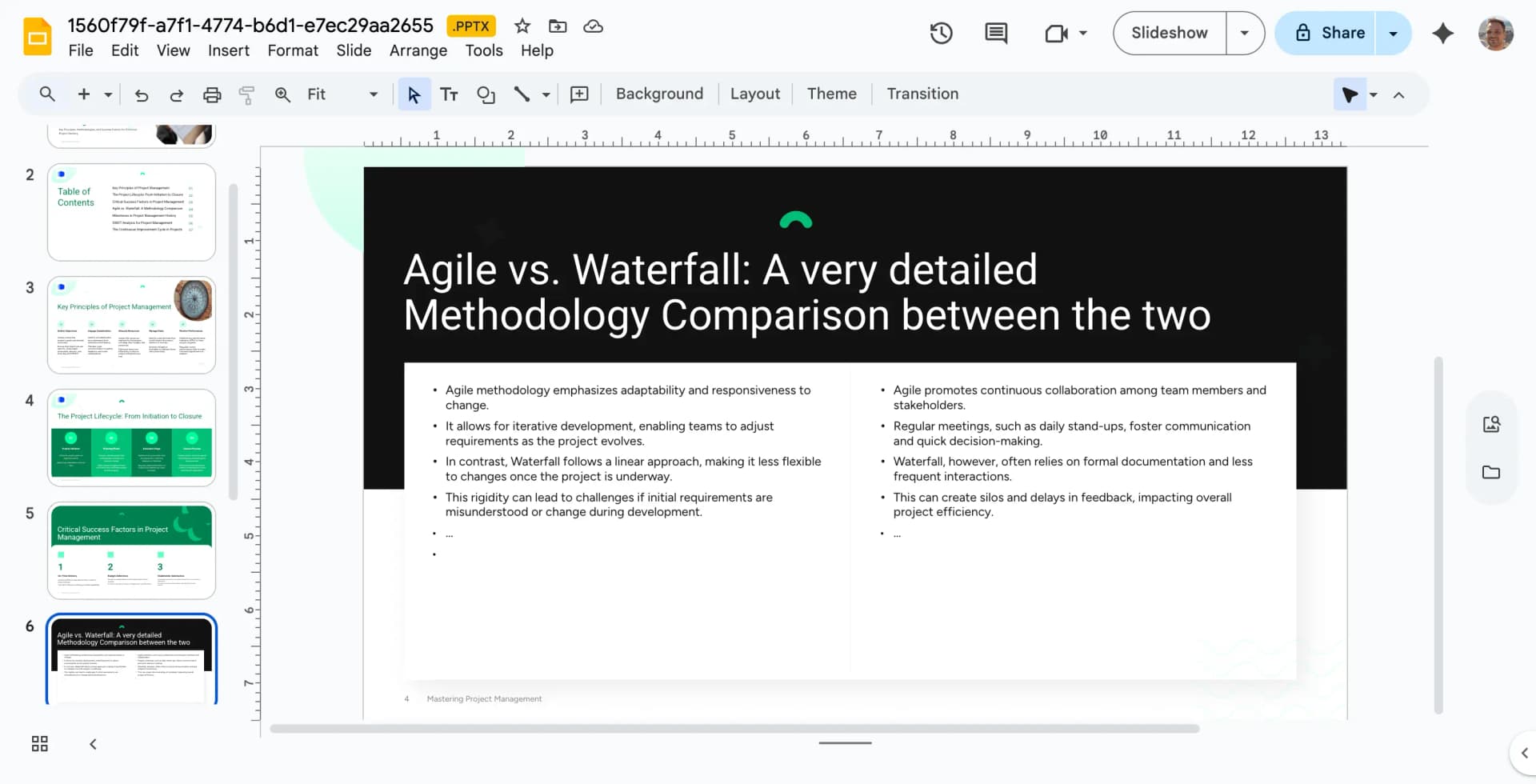
Why It Kills Your Message
- Cognitive overload prevents information retention
- Audiences read instead of listening to you
- Key points get lost in the noise
The AI Solution
Modern AI presentation tools like SlideSpeak automatically break down complex information into digestible chunks. The AI analyzes your content and suggests:
- Optimal text length per slide (6-8 words per bullet point)
- Natural break points for new slides
- Visual hierarchy that guides the eye
Before vs. After Example
Before: "Our Q3 financial results demonstrate significant growth across multiple revenue streams including subscription services which increased by 45%, one-time purchases up 23%, and enterprise contracts growing by 67% compared to the same period last year, resulting in overall revenue growth of 34% and positioning us well for Q4 projections."
After (AI-optimized):
- Q3 Revenue Growth: +34%
- Subscription services: +45%
- One-time purchases: +23%
- Enterprise contracts: +67%
According to research from Harvard Business Review, audiences can only process limited information at once, making concise, visual presentations far more effective.
2. Generic, Template-Heavy Design
Why default templates kill credibility
The Mistake
Using default PowerPoint templates that scream "amateur" and look identical to thousands of other presentations.
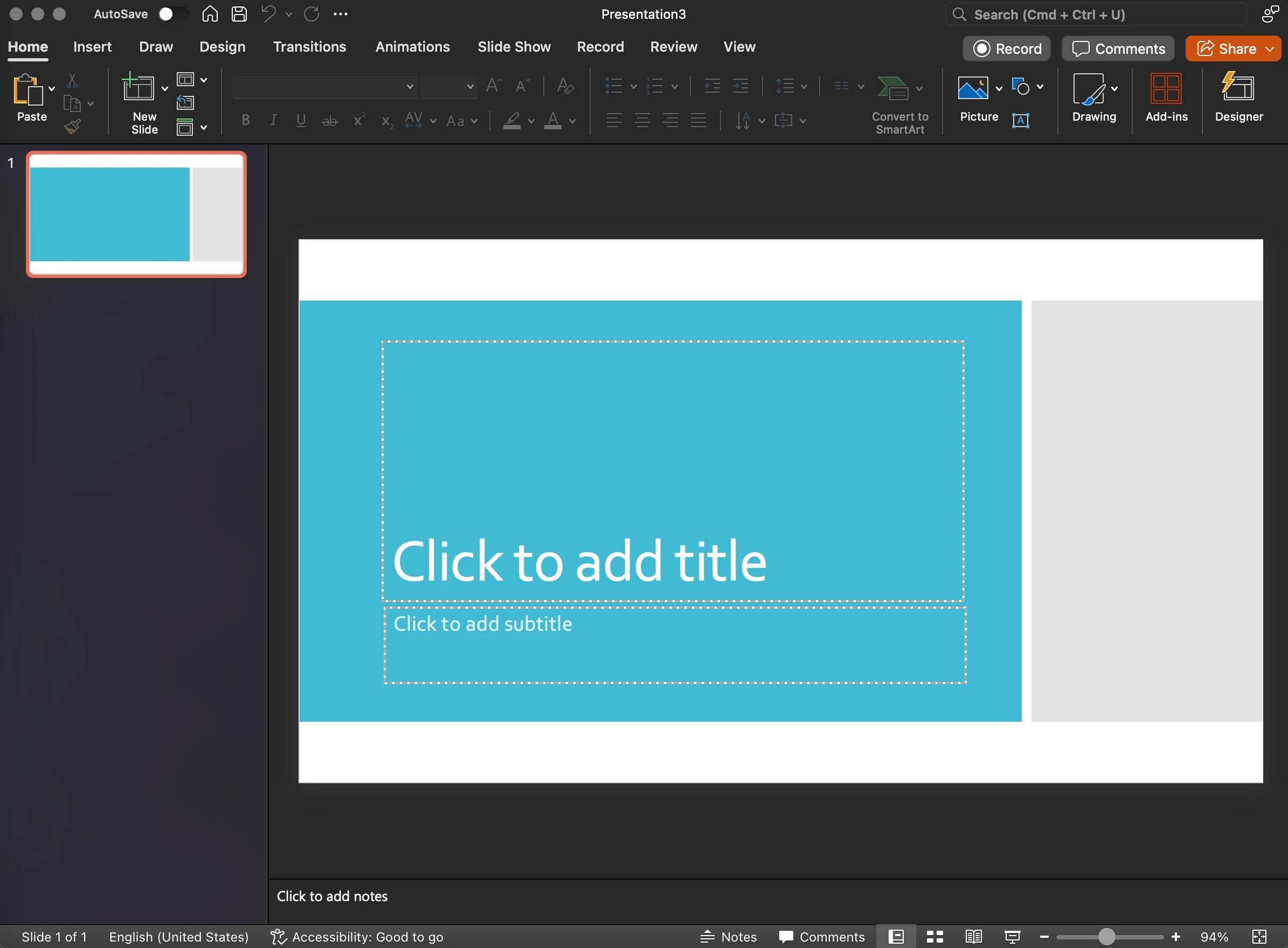
Why It Kills Your Message
- Audiences immediately recognize overused templates
- Generic design undermines credibility
- No visual differentiation from competitors
The AI Solution
AI presentation platforms generate unique, contextual designs based on your content and audience. SlideSpeak's AI considers:
- Industry-appropriate color schemes
- Content-driven layout suggestions
- Brand-consistent styling
- Modern design trends
Research from the Nielsen Norman Group shows that visual hierarchy is crucial for guiding user attention and comprehension.
Pro Tip: AI tools can analyze your company's existing materials and automatically apply consistent branding across all slides.
3. Poor Visual Hierarchy and Flow
Creating slides where nothing stands out
The Mistake
Creating slides where everything looks equally important, with no clear path for the eye to follow.
Why It Kills Your Message
- Audiences don't know where to look first
- Key information gets missed
- Mental fatigue sets in quickly
The AI Solution
AI presentation tools automatically establish visual hierarchy through:
- Strategic font sizing and weight
- Color contrast optimization
- Logical information flow
- Attention-directing elements
AI-Powered Visual Hierarchy
- Headline (largest, contrasting color)
- Key Points (medium size, strategic spacing)
- Supporting Details (smaller, consistent formatting)
- Call-to-Action (highlighted, positioned strategically)
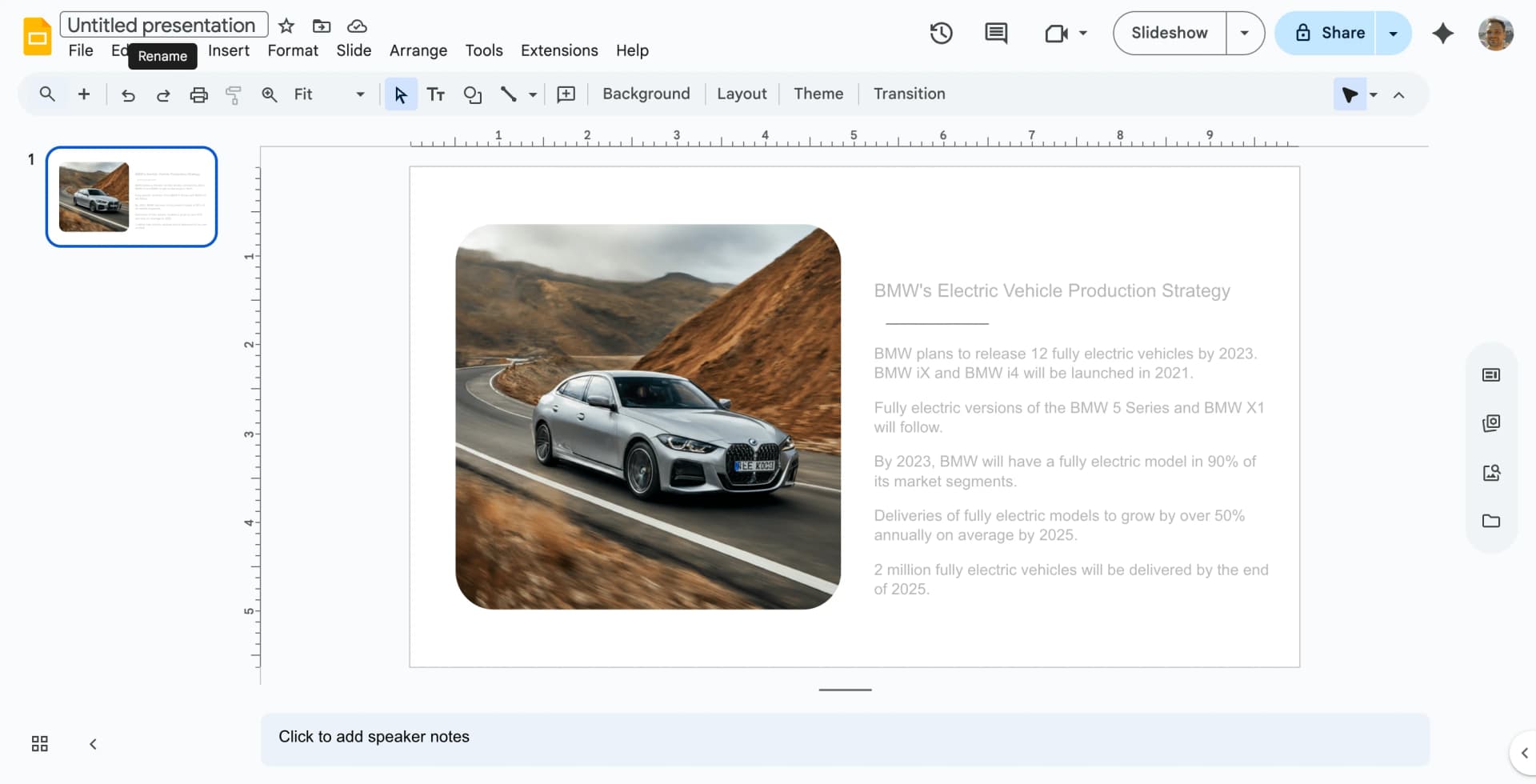
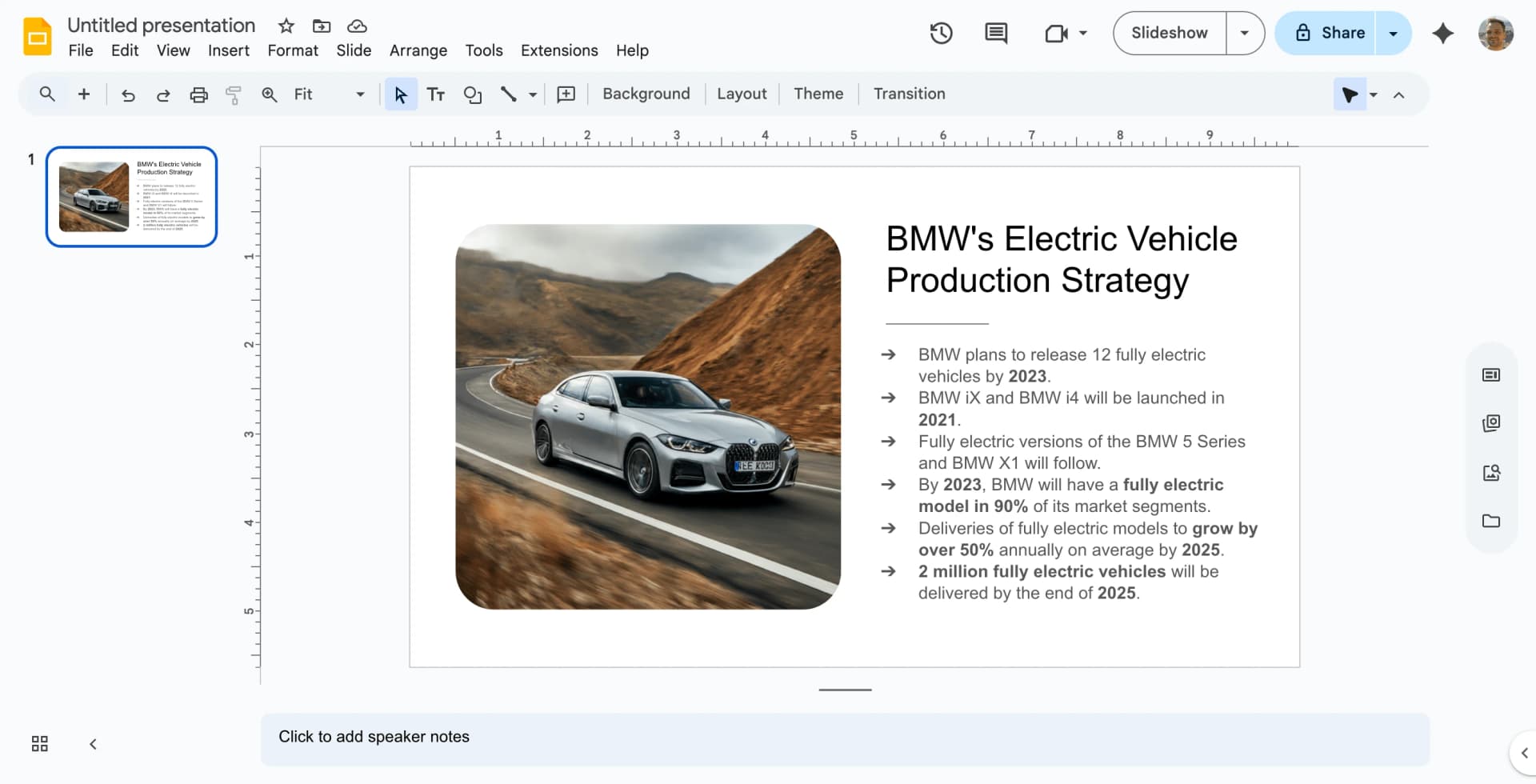
Studies from EdSurge research demonstrate that proper visual hierarchy reduces cognitive load and improves information retention by up to 400%.
Bonus: Using ChatGPT to Optimize Your Presentation Content
Proven AI prompts for better presentations
Even if you're not using a dedicated AI presentation tool like SlideSpeak, you can leverage ChatGPT and other AI writing tools to dramatically improve your presentation content. Here are proven prompts that transform mediocre slides into engaging presentations:
1. Content Condensation Prompt
Use this when: You have too much text on your slides
The Prompt:
"Take this presentation content and condense it into clear, punchy bullet points. Each bullet should be 6-8 words maximum and focus on the key benefit or action. Remove jargon and make it scannable: [Your content here]"
2. Audience-Specific Content Adaptation
Use this when: Presenting the same content to different audiences
The Prompt:
"Rewrite this presentation content for [specific audience: executives/technical team/sales team/students]. Focus on what matters most to them and use their preferred communication style: [Your content here]"
3. Compelling Headlines Generator
Use this when: Your slide titles are boring or unclear
The Prompt:
"Generate 5 compelling, action-oriented headlines for this slide content. Make them specific, benefit-focused, and under 10 words: [Your slide content here]"
4. Call-to-Action Enhancer
Use this when: Your presentations end weakly
The Prompt:
"Create 3 specific, actionable next steps for this presentation. Each should be concrete, time-bound, and clearly connected to the main message: [Your presentation topic and main points here]"
Research from Northern Illinois University confirms that iterative content refinement significantly improves presentation effectiveness.
The SlideSpeak Advantage: AI That Actually Works
How SlideSpeak solves presentation problems automatically
Unlike generic presentation tools, SlideSpeak's AI is specifically trained on presentation best practices:
- Smart Content Generation: Input your topic, and AI creates research-backed, professionally structured content
- Adaptive Design: AI selects themes and layouts that match your industry and audience
- Instant Optimization: Real-time suggestions improve your slides as you work
- Multi-Format Export: Perfect compatibility with PowerPoint, PDF, and web formats
Try SlideSpeak Free: Create your first AI-powered presentation in under 5 minutes at slidespeak.co
Quick Fixes You Can Implement Today
Immediate improvements for better presentations
While AI tools provide the best long-term solution, here are immediate improvements you can make:
- The 6x6 Rule: Maximum 6 bullet points with 6 words each
- High Contrast: Ensure text is easily readable against backgrounds
- One Message Per Slide: Each slide should support a single key point
- Visual Breathing Room: Use white space generously
- Consistent Branding: Apply the same colors and fonts throughout
Frequently Asked Questions
Common questions about AI presentations