

10 Pitch Deck Examples + Free AI Prompts to Copy (2026)
Written by

Published on
On this page
Most pitch deck examples you find online are galleries of famous startup decks. You scroll through twenty of them, admire them, close the tab, and still face a blank first slide. This post works differently. Each example below is a complete pitch deck design, shown as a real deck, paired with a free AI prompt you copy into ChatGPT or Claude to build your own in the same style.
The ten styles cover the range investors actually see in 2026: clean and minimal, warm and story-led, bold consumer, structured venture, modern SaaS, and data-first. Pick the one that fits your company, copy the prompt, and you have a designed deck instead of a description of one.
What makes a pitch deck design work
Before the examples, the design choices that separate a strong deck from a forgettable one. These hold across every style below.
- One idea per slide. A slide that argues a single point reads in three seconds. A slide with four points reads in none.
- Traction near the front. If the numbers are good, investors want them early. Strong decks lead with proof, not background.
- One accent color. A single accent against a restrained base looks deliberate. Five competing colors look like a template.
- Type carries the deck. Most great decks use two typefaces and let size and weight do the work, with no clip art filling the gaps.
- Consistency over decoration. The same margins, the same label style, the same chart treatment on every slide. Repetition is what reads as polish.
Each style applies these rules in a different voice. Here are ten you can use today.
1. Runway: clean and minimal
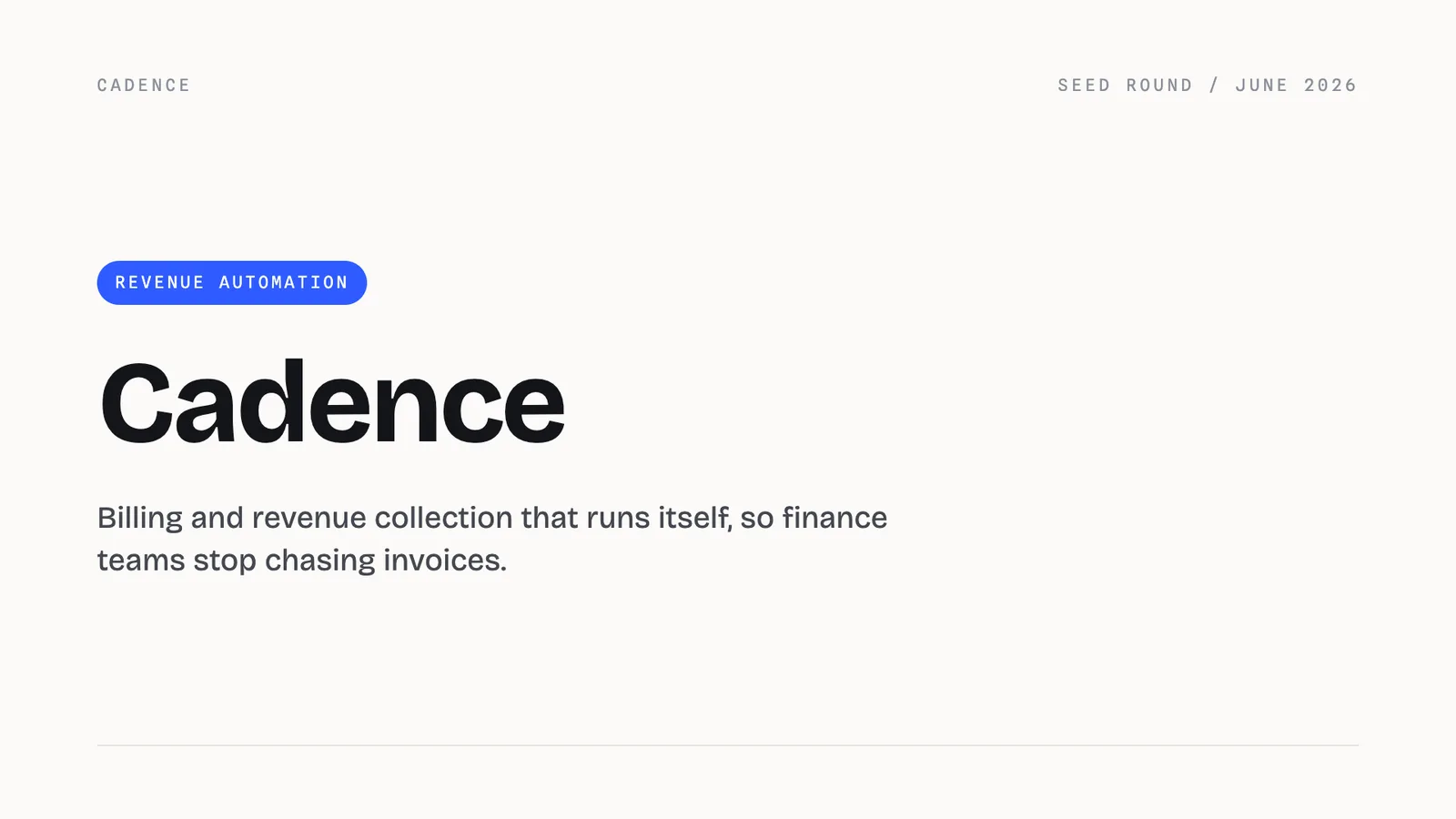
The style: White space, one confident accent, and big calm headlines. Nothing on the slide that does not need to be there.
You have seen it in: the light, uncluttered decks Uber, Dropbox, Square and Buffer are known for.
Why it works: The empty space signals you trust the product to carry the room, so the one number you want remembered has nothing to compete with.
Best for: B2B SaaS and seed rounds where the product is the story and restraint signals confidence.
Build it: Copy the free Runway prompt and paste it into ChatGPT or Claude with your content.
2. Hearth: warm and story-led
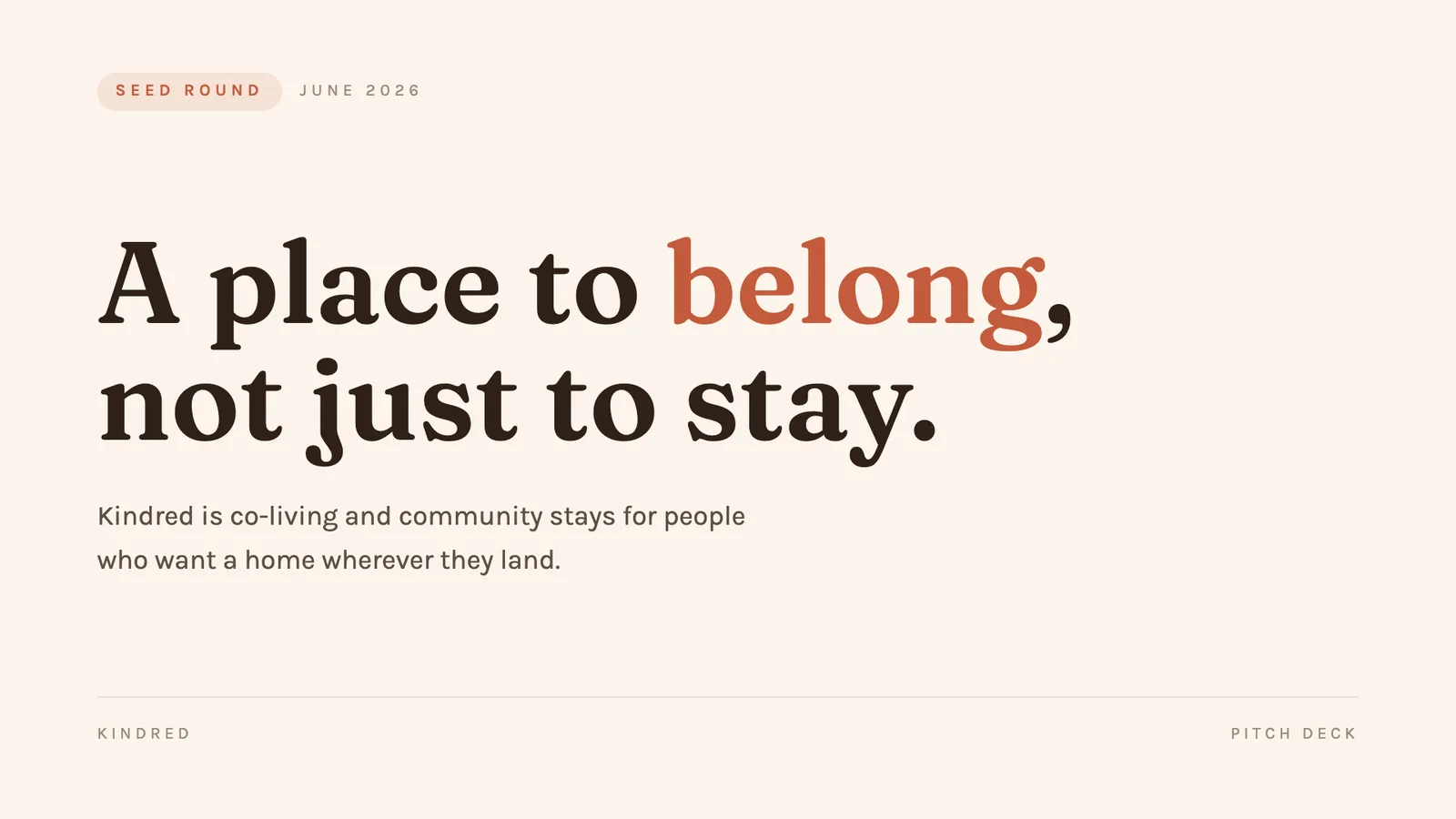
The style: Warm cream tones, an elegant serif, and a single clay accent. The deck feels human and built for narrative.
You have seen it in: the warm, photo-led, story-first decks Airbnb, WeWork and Peloton are known for.
Why it works: Warm tones and a serif voice make investors feel the mission before they weigh the metrics, which is the whole point of a story-led raise.
Best for: brand-led and community products where the pitch is a story, not a spec sheet.
Build it: Copy the free Hearth prompt and add your own story.
3. Spark: bold and consumer
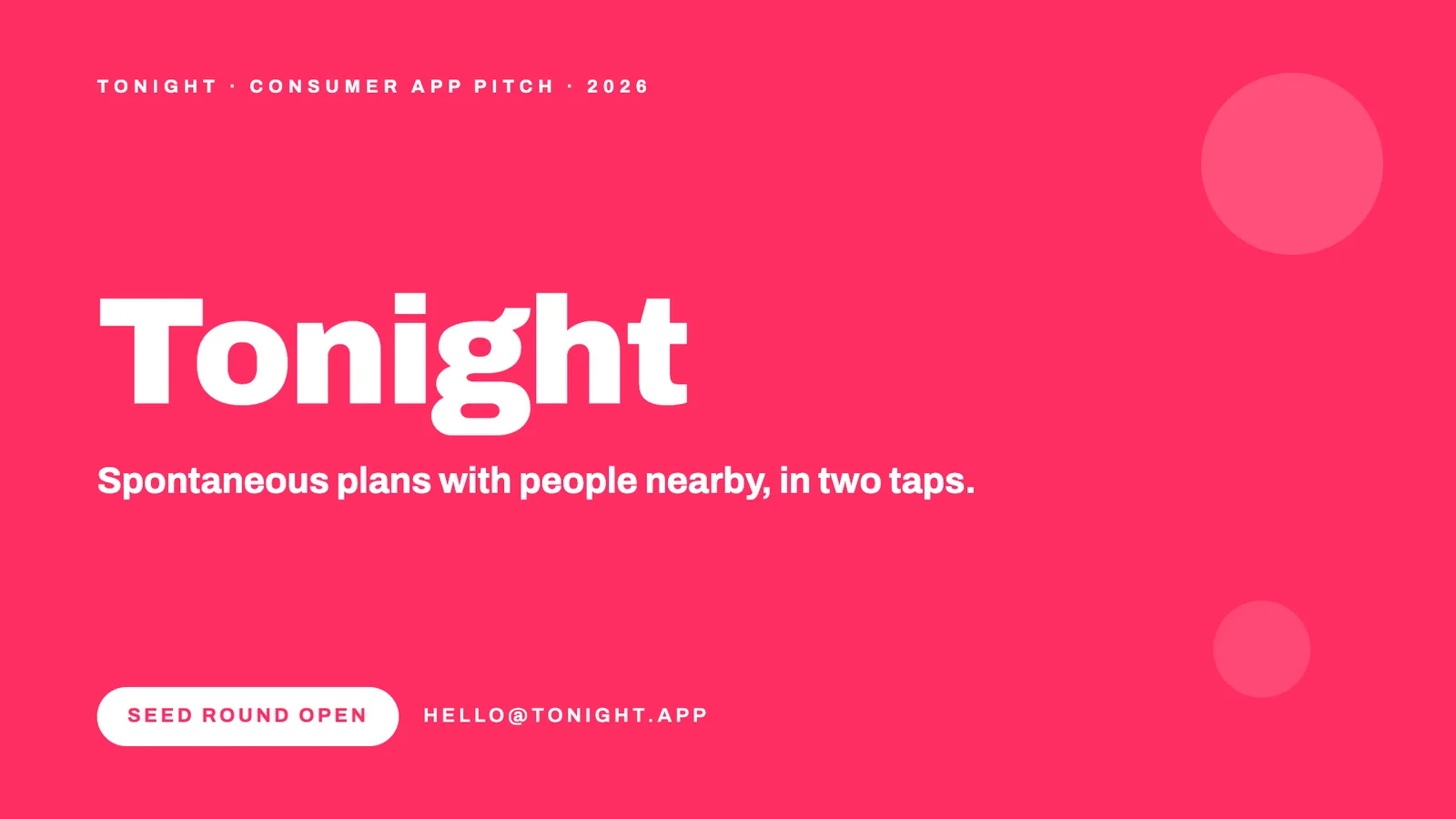
The style: Saturated color blocks, heavy display type, and oversized numbers. High energy, still legible.
You have seen it in: the bold, playful consumer decks Tinder, Snapchat and Bumble are known for.
Why it works: Consumer investors decide in seconds whether a product looks fun, and a loud opening slide answers that before you start talking.
Best for: consumer and social apps that need to feel fun in the first five seconds.
Build it: Copy the free Spark prompt and drop in your product.
4. Term Sheet: structured venture
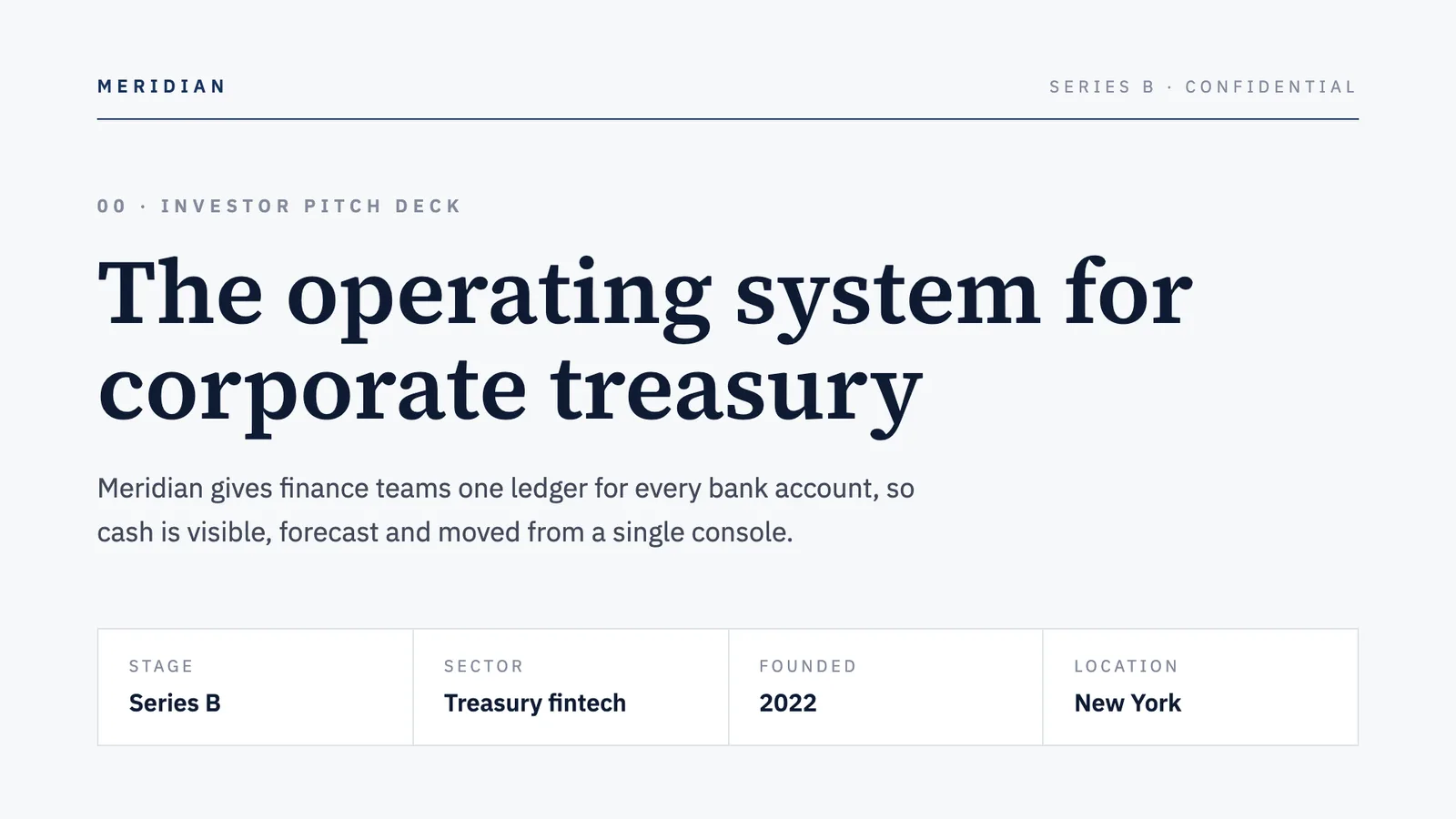
The style: A visible grid, an editorial serif, navy ink on cool white, and numbered sections. It reads like a deck built to the classic investor template.
You have seen it in: the structured, framework-driven decks behind the Sequoia template and LinkedIn's Series B raise.
Why it works: A familiar framework grid puts problem, traction and ask exactly where investors expect them, so the deck feels low-risk to read.
Best for: Series A and B rounds, fintech, and enterprise pitches where structure signals rigor.
Build it: Copy the free Term Sheet prompt and fill in your raise.
5. Aurora: modern SaaS
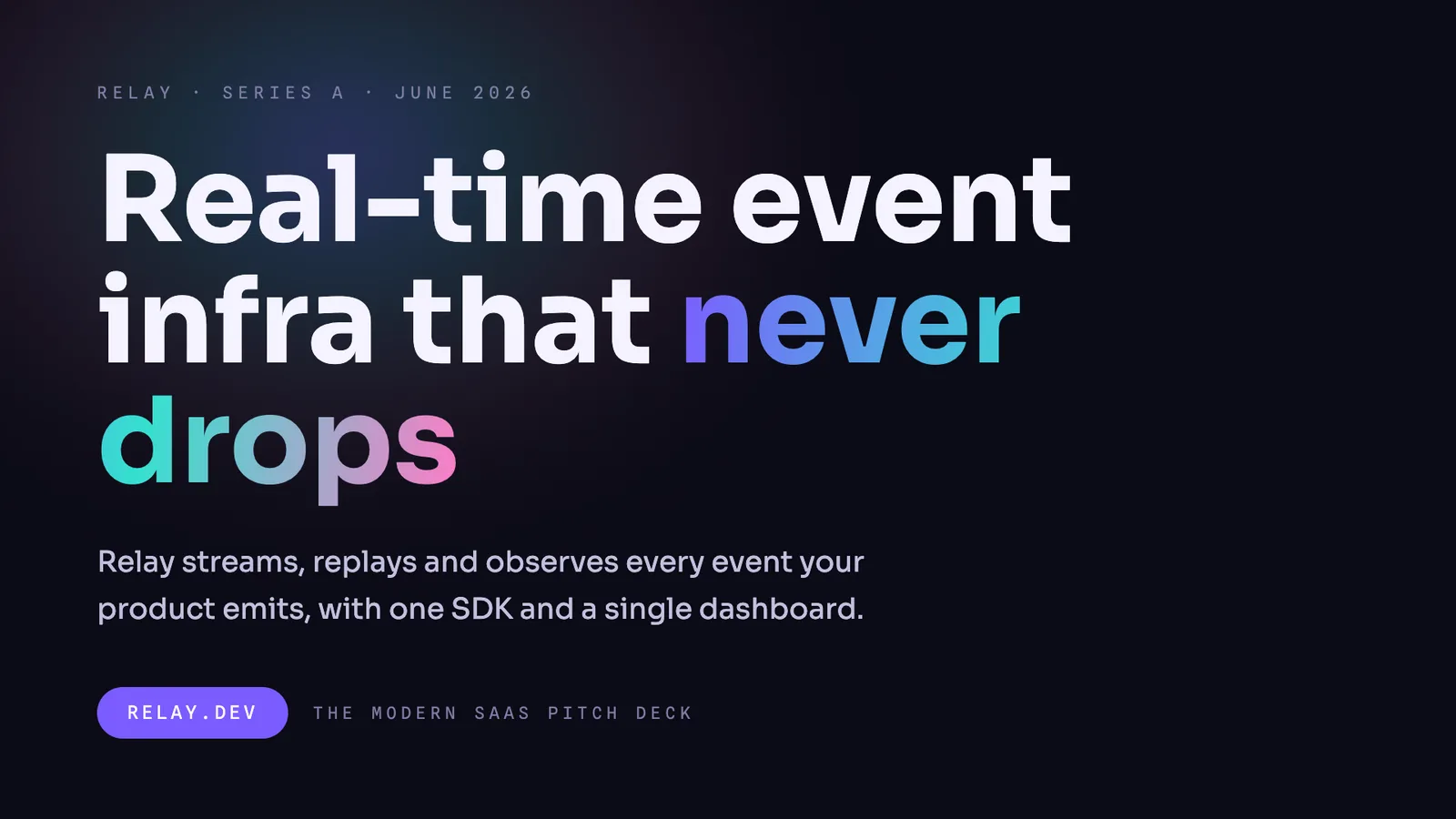
The style: A deep indigo canvas with violet and cyan gradients, soft glows, and clean geometric type. A current Series A look.
You have seen it in: the modern, gradient-driven SaaS decks Front, Stripe and Intercom are known for.
Why it works: The gradient-on-dark look reads as well-funded and current, so investors pattern-match you to the category leaders before you pitch.
Best for: developer tools and SaaS companies that want to look like the category leader.
Build it: Copy the free Aurora prompt and ship it.
6. Traction: data-driven
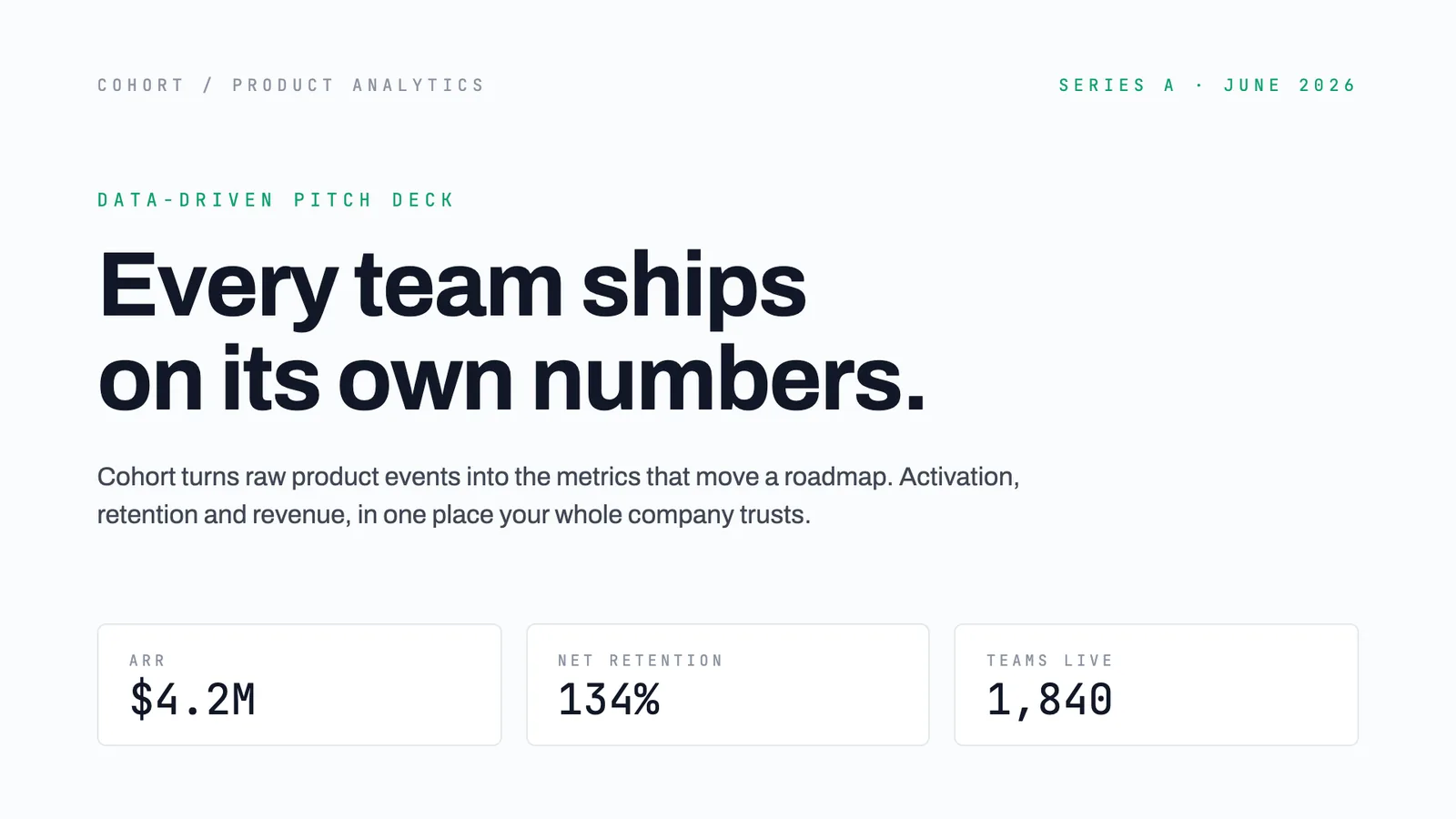
The style: A light dashboard look with precise mono numbers, KPI cards, and clean charts. Built for decks where the metrics carry the argument.
You have seen it in: the data-heavy decks Mixpanel and Mattermark are known for, and the growth slides Uber used.
Why it works: Leading with clean, legible numbers says the growth is the story, and a deck that respects its data signals a team that does too.
Best for: growth-stage rounds where retention and revenue are the pitch.
Build it: Copy the free Traction prompt and plug in your numbers.
7. Monolith: dark and minimal
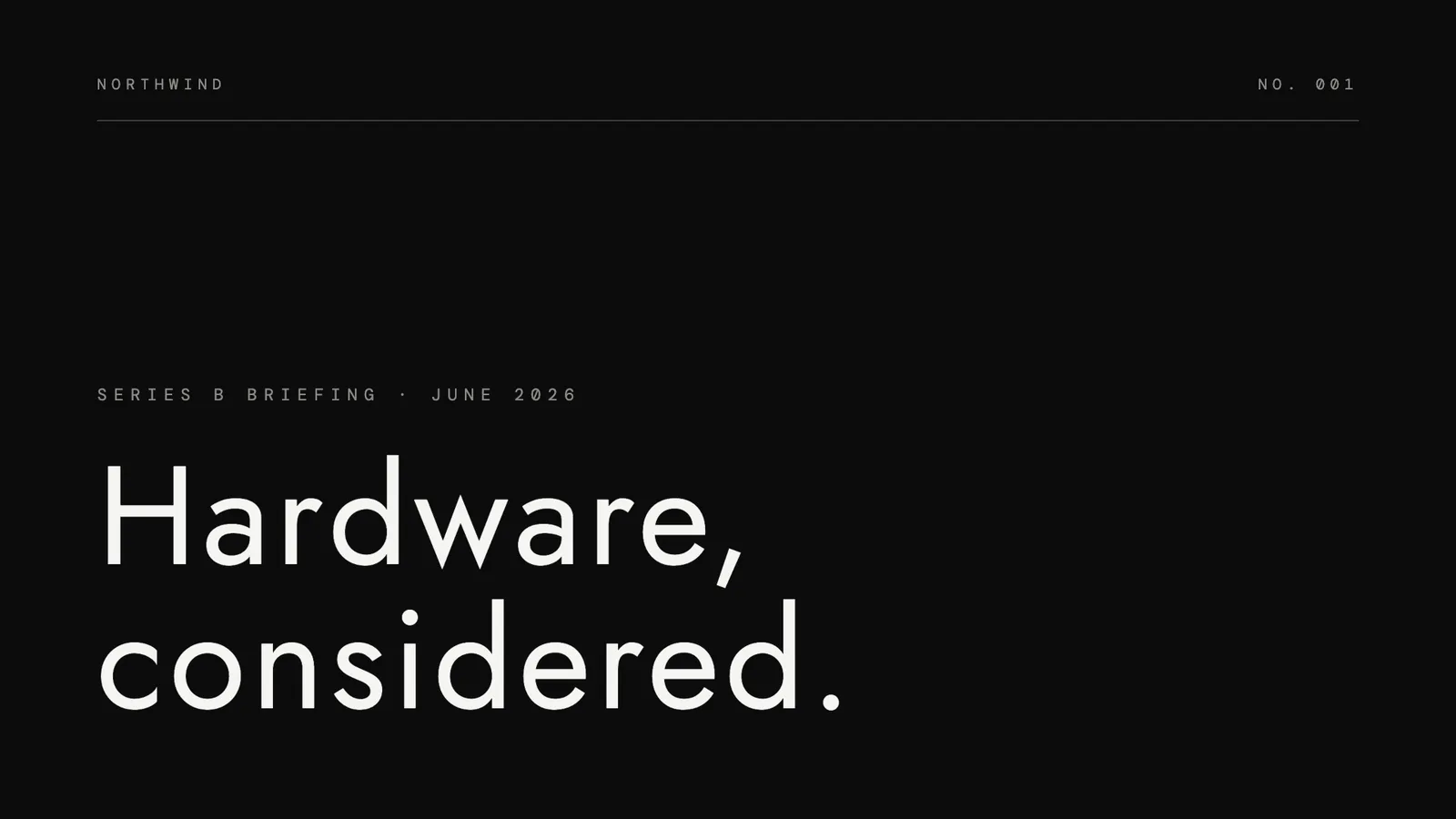
The style: Near-black slides, huge thin type, and a few faint rules. Luxury-brand restraint where the empty space is the point.
Why it works: Extreme restraint reads as confidence, and on near-black slides a single figure lands harder than any busy layout could.
Best for: hardware launches and premium products where the brand voice is the argument.
Build it: Copy the free Monolith prompt.
8. Midnight Pitch: dark and bold
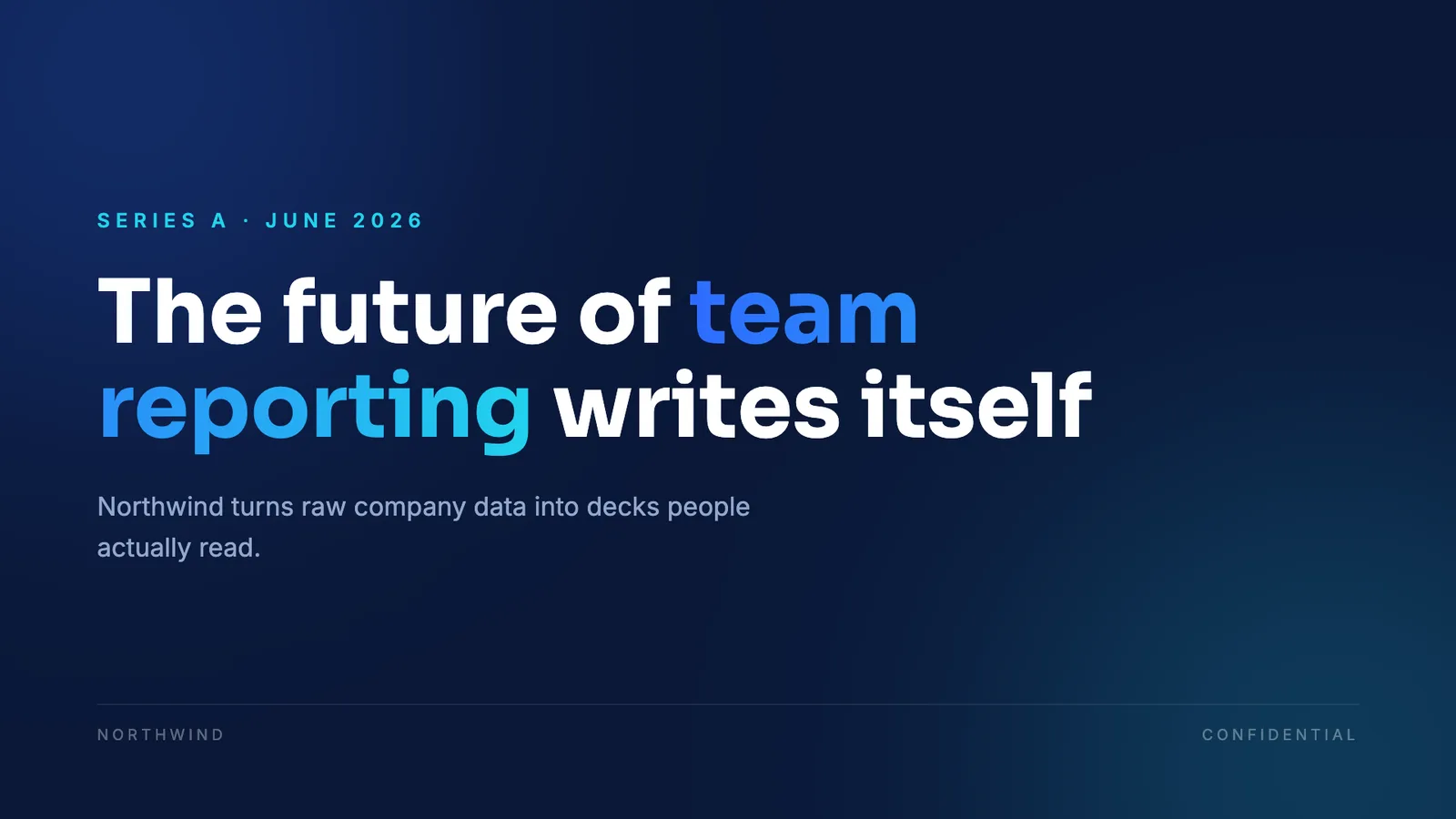
The style: A dark base with bold type and strong contrast. Dramatic without tipping into noise.
Why it works: Heavy type on a dark field holds a room's eyes on the screen, where a light, crowded slide would wash out under projector glare.
Best for: later-stage raises and on-stage decks that need to read from the back of the room.
Build it: Copy the free Midnight Pitch prompt.
9. Demo Day: bold and high-contrast
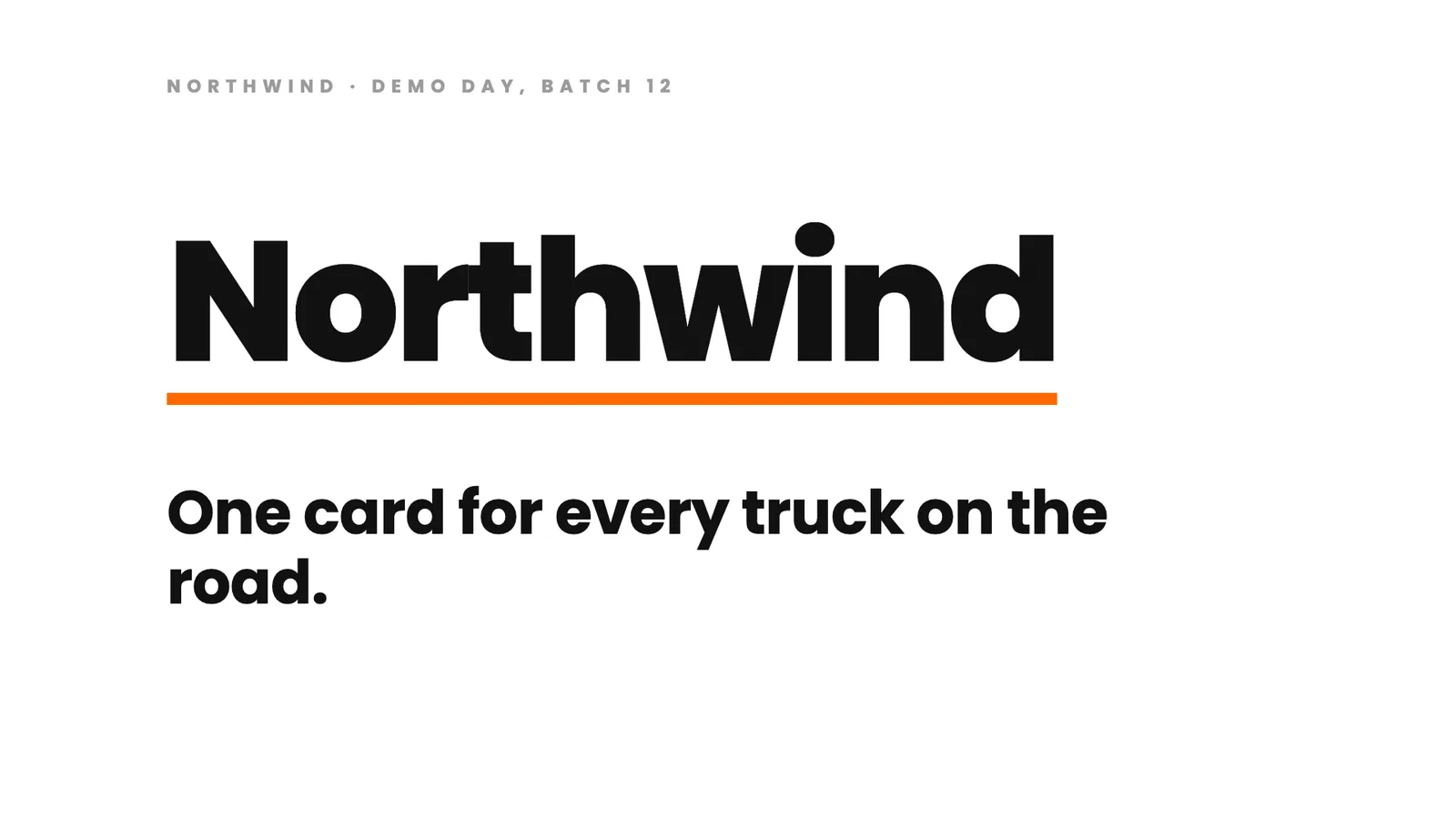
The style: High-contrast, bold, and stripped to essentials. One point per slide, sized to land fast.
Why it works: When a hundred startups pitch back to back, one oversized idea per slide is the only thing a judge actually retains.
Best for: accelerator and demo-day pitches where you have ninety seconds and one screen.
Build it: Copy the free Demo Day prompt.
10. Holo: soft and friendly
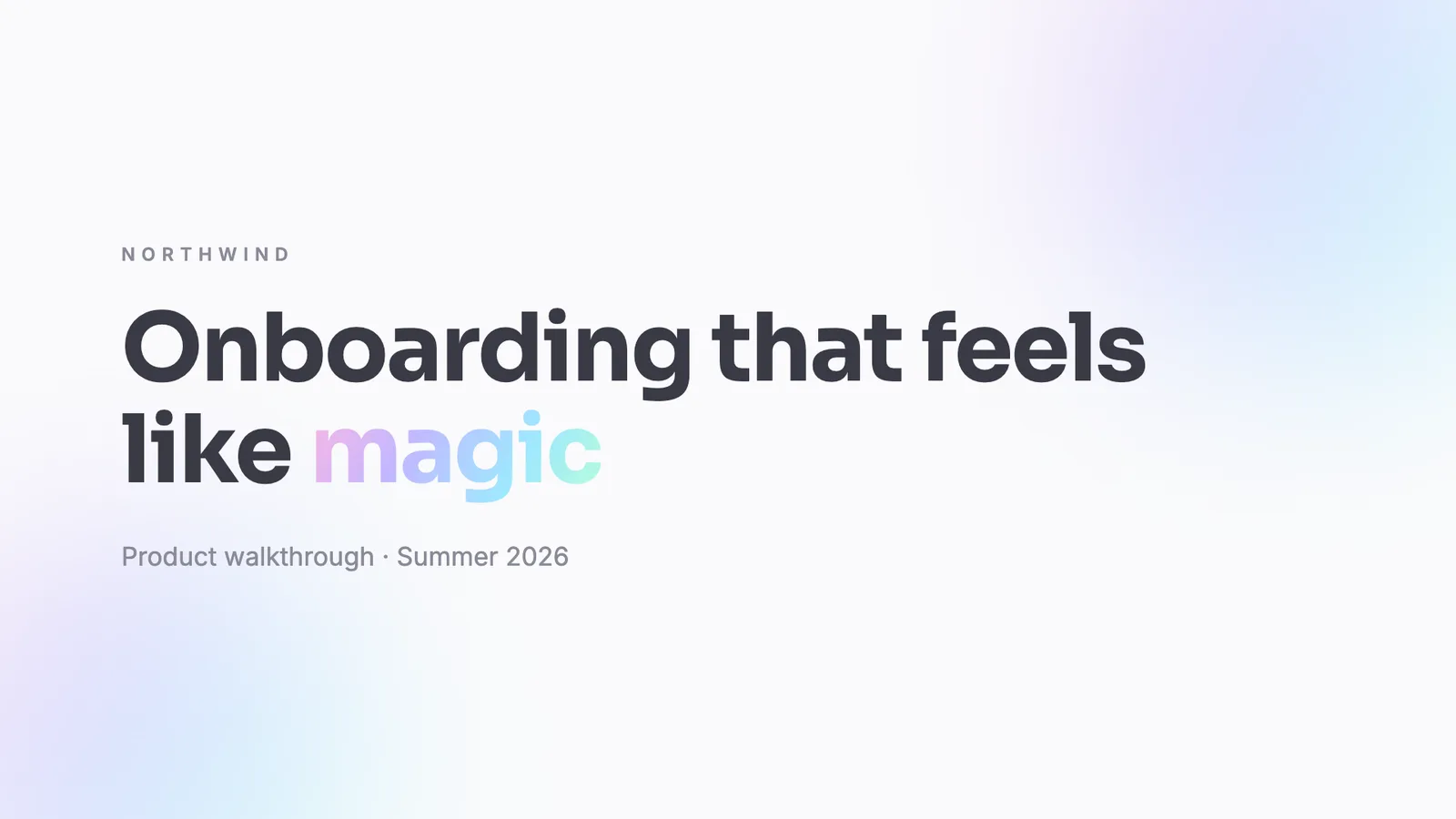
The style: Soft tones, gentle shapes, and an approachable voice. Friendly without looking unfinished.
Why it works: An approachable look lowers the guard of early-stage and community audiences, who back people they like as much as numbers they trust.
Best for: early-stage and community products that want to feel welcoming rather than corporate.
Build it: Copy the free Holo prompt.
What to include in a pitch deck
A strong pitch deck runs ten to fifteen slides and answers an investor's questions in the order they ask them. Use this as the checklist behind any of the pitch deck examples above.
- Title. Company name, a one-line description of what you do, and the round you are raising. Nothing else.
- Problem. The specific pain you solve, in plain language. One problem, not five.
- Solution. How you solve it, and why your approach is different. Show the product if you can.
- Product. A short walk through how it works, ideally with a real screen or a two-step flow.
- Market. The size of the opportunity as TAM, SAM, and SOM, with the wedge you start from.
- Traction. Revenue, growth, users, or retention. Lead with whichever number is strongest.
- Business model. How you make money, your pricing, and unit economics when they are healthy.
- Why now. The shift in technology, behavior, or regulation that makes this the right moment.
- Team. The two or three people who make investors believe you can build this, and why.
- The ask. How much you are raising, the milestones it funds, and how to reach you.
Keep one idea per slide, put traction near the front, and cut anything that does not move an investor closer to yes. Every style in the pitch deck prompt library carries this structure, so you can focus on the content and let the prompt handle the design.
How to build your pitch deck with AI
Every style above is a free design prompt in the SlideSpeak prompt library. Three steps take you from example to finished deck:
- Pick the style that fits your stage and story.
- Copy the prompt from its page. Each one specifies the exact colors, fonts, and layout rules.
- Paste it into ChatGPT or Claude with your content, or generate and export the deck in SlideSpeak as PowerPoint or PDF.
The prompt does the design. You bring the story and the numbers.
Pitch deck examples FAQ
What are the best pitch deck examples?
The best examples to learn from are the ones whose style matches your company. The ten above span clean, warm, bold, venture, SaaS, and data-driven looks, each modeled on the design patterns behind well-known startup decks, so you can copy the closest fit instead of forcing one template.
What should a startup pitch deck include?
Most seed and Series A decks run ten to fifteen slides: problem, solution, product, traction, market, business model, team, and the ask. Keep one idea per slide and put traction near the front.
How many slides should a pitch deck have?
Ten to fifteen for an investor deck. Fewer slides with a single point each beat a long deck nobody finishes, which is why every style above is built around one idea per slide.
Can AI design a pitch deck?
Yes. With a clear design prompt that fixes the palette, fonts, and layout, ChatGPT, Claude, and SlideSpeak can produce a styled deck from your content. The quality depends on the prompt, which is why each style above ships with a tested one.
What is the best pitch deck design for a startup?
Match the design to your story. Lead with Traction or Term Sheet when the numbers are strong, Hearth or Spark when the brand carries the pitch, and Runway or Aurora for a clean product-led look.
Start with a style
You do not need a designer to ship a deck that looks like the examples above. Browse the free pitch deck prompt library, copy the style that fits, and build your deck in SlideSpeak.


